Platforms and Fulfilment
Marketplace or Your Own Store
Reach against margin, rules against freedom: a practical comparison of selling on a marketplace and running your own online store.
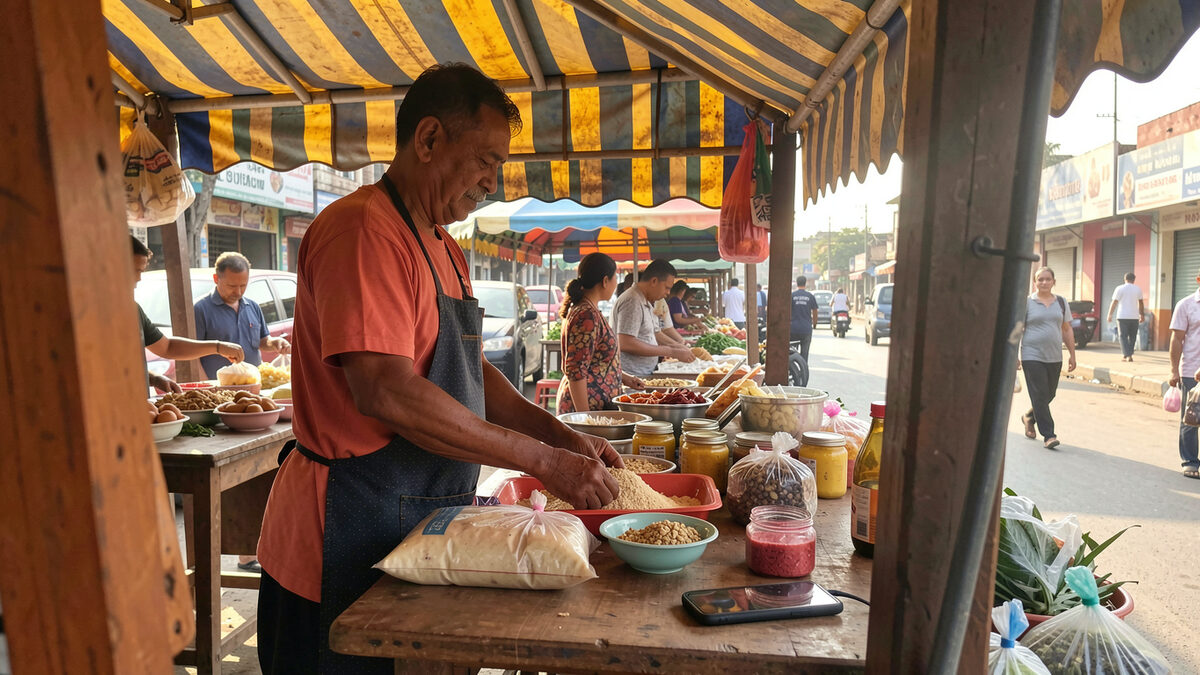
Reach: the marketplace starts ahead
A marketplace begins with something a new shop cannot buy: shoppers who are already there. They have accounts, saved payment methods and a habit of browsing. For a seller, that means the first order arrives far sooner than it would from an empty store, and the cost of acquiring that customer is close to zero. In the early months of a business, that advantage is decisive.
The catch is that the reach is not the shop's. The audience belongs to the platform, and it can be shown to a competitor as easily as to the shop. The moment a shopper is looking at two similar products, the platform's own logic takes over, which usually means price and delivery speed. Reach that is rented is still useful, but it is not an asset the shop owns, as the wider view in platforms and fulfilment explains.
Margin: the commission is only part of the cost
A marketplace commission looks like a single percentage, but the real cost is higher. There is the commission itself, any payment fee, sometimes a storage or fulfilment fee if the platform handles stock, and the marketing spend needed to stay visible in a crowded listing. Add the returns that a platform may handle generously, and the effective margin can be far below what the headline rate suggests.
An own store has no commission, but it has a different set of costs: hosting, payment fees, the marketing needed to attract visitors, and the time spent on the site. The honest comparison is not commission against nothing but the total cost per delivered order in each channel. A shop that measures only the commission will conclude the marketplace is expensive; a shop that measures the whole cost may find the two channels closer than expected.
Rules: who decides how you sell
On a marketplace the platform decides the rules. It sets the return window, the delivery expectations, the content requirements and the penalties. The rules are usually reasonable, and they are not negotiable. A shop that depends on a single marketplace is therefore exposed to decisions made elsewhere, sometimes with little warning, and sometimes in a way that changes the economics of a product overnight.
An own store sets its own rules. That freedom is real but it is also a responsibility, because the shop must decide the return policy, the delivery terms and the data protection position itself. Freedom without a decision is not an advantage; it is simply an unmanaged risk.
Data: the asset that compounds
This is where the two channels differ most, and it is the argument that is hardest to see in the first year. A marketplace shares only part of what it knows about the customer. An own store knows who bought, what else they looked at, how often they return and what they said to support. That knowledge compounds: it improves the product pages, the emails and the stock decisions, and it is the shop's own.
A shop with its own customer list can bring people back without paying again. A shop that sells only on a marketplace pays for every visit, every time. Over several years, that difference is usually larger than the commission, which is why the data question should be part of the first comparison rather than an afterthought.
The hybrid that most shops actually run
In practice, most successful shops use both channels with different jobs. The marketplace is a volume and discovery engine, useful for reaching shoppers who do not know the brand and for clearing stock. The own store is where the brand, the margin and the customer relationship live, and where repeat business is built. The two are not competitors; they are a front door and a living room.
The failure mode is not using both. It is using both badly, by treating the own store as a copy of the marketplace listing. The own store should be better, not the same: more product information, a clearer brand, a reason to buy directly. The delivery and returns experience described in last-mile delivery expectations is part of that reason.
How to decide for your own shop
Start with three numbers. What is the true cost per delivered order in each channel? What share of customers buy again within a year? And what would happen to the business if the marketplace changed its rules tomorrow? If the third answer is uncomfortable, the own store is not a luxury but insurance.
A practical path is to launch on a marketplace to learn what sells, then build the own store around the products that proved themselves, using the marketplace for reach and the store for repeat business. That sequence uses the marketplace's advantage in the early months and the store's advantage later, which is usually the cheapest way to grow.
A wider view
The rules that govern trade, including how goods and services move across borders, are documented by UNCTAD on transport and trade logistics. That material is useful for a shop planning to sell abroad, because it describes the environment the shop is entering rather than a vendor's promise.
For most shops, though, the decision is local and unglamorous: measure the whole cost, keep the customer list, and never depend on a single channel. Do those three things and the marketplace becomes a tool rather than a landlord.