Payments and Checkout
Digital Payments After COVID-19
Card, wallet and QR payments grew fast from 2020. Here is what actually changed at the counter and what merchants should watch next.
Contactless at the counter
The most visible change was at the physical till. Several European countries raised the limit below which a contactless card needs no PIN, and shoppers who had avoided touching a terminal found the tap quicker and cleaner. Habits formed under a health rule often survive the rule, because the new behaviour is also simply easier. A tap is faster than a chip and a PIN, and speed is a reason that outlives the pandemic.
The effect on small traders was larger than it looked. Handling cash carries a real cost: counting, banking, and the risk of error or theft. When more customers paid by tap, that cost fell, and the incentive to accept card payments at all rose. The same shift is one of the reasons the whole checkout, online and off, is discussed in payments and checkout.
Wallets and the phone as a card
Mobile wallets existed long before 2020, but the closures gave people a reason to set one up and a chance to use it daily. Once a card is inside a phone, paying online becomes a tap or a face check rather than a typed number. For a shop, this matters because typing a long card number on a phone keyboard is one of the most reliable ways to lose a mobile buyer.
The rise of wallets therefore changed the checkout as much as the counter. Offering a wallet option is not a luxury for a shop whose customers are mostly on phones; it is a way of removing the single most frustrating step. The broader argument for a short checkout is made in customer experience in online retail.
QR codes and the market stall
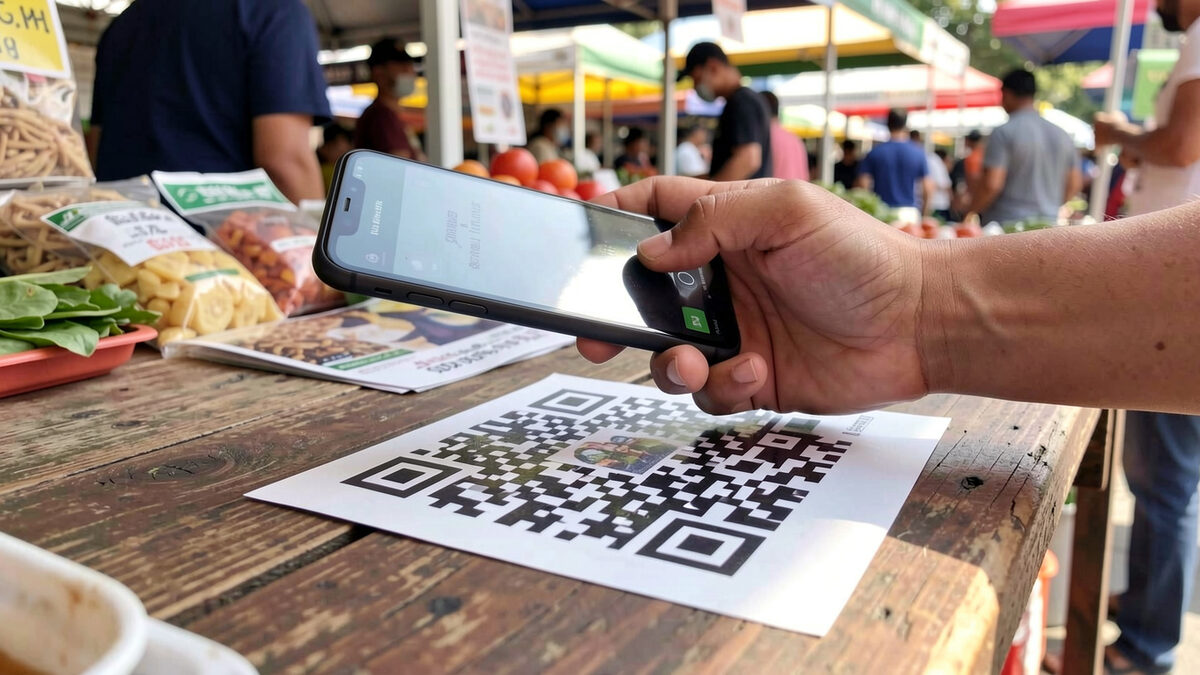
QR payments grew fastest where small traders had the least infrastructure. A printed code on a stall needs no terminal, no contract and almost no training, which made it a practical option for markets, taxis and small shops. In some European countries the growth was dramatic, and it changed the default assumption that small payments are made in cash.
For online shops the QR story matters indirectly. A shopper who has learned to pay by scanning a code is comfortable with a payment that happens inside a phone, and that comfort carries over to online checkout. The habit is the same even when the surface is different, which is why QR growth is worth watching even for a shop that never prints a code.
Buy now, pay later: useful and easy to misread
Instalment payments grew quickly after 2020, especially for younger shoppers and for baskets large enough that a single payment feels heavy. For a merchant the appeal is a higher conversion on expensive items. The risk is that the cost is not always obvious, because the merchant may pay a fee that is higher than a card fee, and because returns interact badly with a payment plan that has already started.
A shop considering instalments should ask three questions. What does the provider charge on a returned order? Who handles a dispute when a customer has already made two of three payments? And does the plan attract customers who would have bought anyway? If the answer to the last question is yes, the shop is paying a fee for a sale it already had.
What this changed in the checkout
Three practical consequences stand out. The first is that the checkout should be short, because the payment methods people now expect are fast and a long form undoes that advantage. The second is that the total cost, including delivery, should be visible before the last step, because a shopper who feels tricked at the final screen does not come back. The third is that the name shown on the customer's bank statement should be recognisable, because an unfamiliar descriptor is a common cause of disputes.
None of these is exotic. They are the ordinary hygiene of a checkout, and they matter more as payment itself becomes invisible. The wider set of choices, including what each method costs once disputes are counted, is set out in payments and checkout.
What to watch next
Two developments are worth attention without being acted on yet. Open banking, which lets a shopper pay directly from a bank account with strong authentication, is spreading in Europe and could reduce card fees for some shops. Account-to-account schemes run by central banks and bank consortia are also growing, though their reach varies a great deal by country. Both promise lower cost, and both depend on customer adoption that is still uneven.
Official data on payment systems, including the volume and value of different instruments, is collected by the Bank for International Settlements and by national central banks. That data is the right place to check a claim about payments rather than a vendor's summary. For a shop, the practical rule is to adopt a new method when its own customers ask for it, not when the trade press announces it.
The shop's version of the story
Seen from a small shop, the last five years of payments come down to one sentence: paying became faster, and the shops that made paying easy kept more of the customers they had already persuaded. The method matters less than the friction. A tap, a wallet or a scan all do the same job, which is to let a willing buyer finish.
That is why the next useful step is not to add another method but to measure where buyers stop. If they stop at the payment step, the problem is friction, and the fix is usually to shorten the form and offer the method they already trust. If they stop earlier, the problem is elsewhere, and the shopper section is the better place to look.